Player Spotlight: Rising Stars to Watch This Year
Every season has a handful of players who go from promising squad options to names you cannot stop hearing. This year feels particularly loaded with that kind of potential. Squad reshuffles, tactical shifts, and a packed international calendar have opened doors that were firmly shut just twelve months ago — and a new generation of footballers is walking straight through them.
Why This Season Is the Perfect Breakout Window
This season offers an unusually wide breakout window for young talent, driven by a combination of managerial changes, squad transitions, and a mid-cycle international tournament creating rotation pressure across top leagues.
Several clubs that invested heavily in veterans two or three years ago are now watching those players age out of peak form. That creates genuine first-team minutes for academy graduates and recently promoted prospects who would otherwise be warming benches. Add in the financial constraints tightening transfer budgets at mid-table clubs, and the logic becomes clear: developing youth is cheaper than buying experience.
Tournament cycles matter too. Players pushing for international call-ups need consistent club minutes to make their case to national team managers. That pressure filters down — coaches who might have defaulted to a reliable veteran are now giving younger players extended runs. When a 20-year-old gets eight consecutive starts, the data accumulates fast.
What Makes a "Rising Star" Worth Watching?
A rising star worth tracking is a player aged roughly 17 to 23 who has secured regular first-team minutes, shown an upward performance trajectory over at least six to eight weeks, and demonstrated qualities that suggest their ceiling is considerably higher than their current level.
The criteria used here go beyond raw age. Three filters matter most:
- Consistent starting XI presence — not just cameos. A player who comes on in the 75th minute weekly tells you very little about their readiness.
- Statistical output relative to role — goals and assists for attackers, key passes and progressive carries for midfielders, defensive actions and aerial win rates for defenders. The numbers do not need to be record-breaking; they need to be trending upward.
- Scouting radar activity — when clubs with serious recruitment infrastructure start attending a player's matches, that is a credible signal. Transfer speculation, even at an early stage, reflects genuine market interest.
Players who tick all three boxes are worth your attention. Those who tick two are worth bookmarking. One out of three is just hype.
Midfield Maestros in the Making
The most exciting midfield prospects right now are young attacking and central midfielders combining creative output — key passes, chance creation, progressive ball-carrying — with a tactical maturity that usually takes years to develop.
Look toward the Bundesliga and Ligue 1 for the clearest examples. Both leagues have historically been fertile ground for young midfielders given the tactical freedom coaches allow and the quality of their youth development pathways. A 21-year-old attacking midfielder operating in a high-press system who is already averaging multiple key passes per 90 minutes is not just a fantasy football asset — he is a player whose market value will look very different by January.
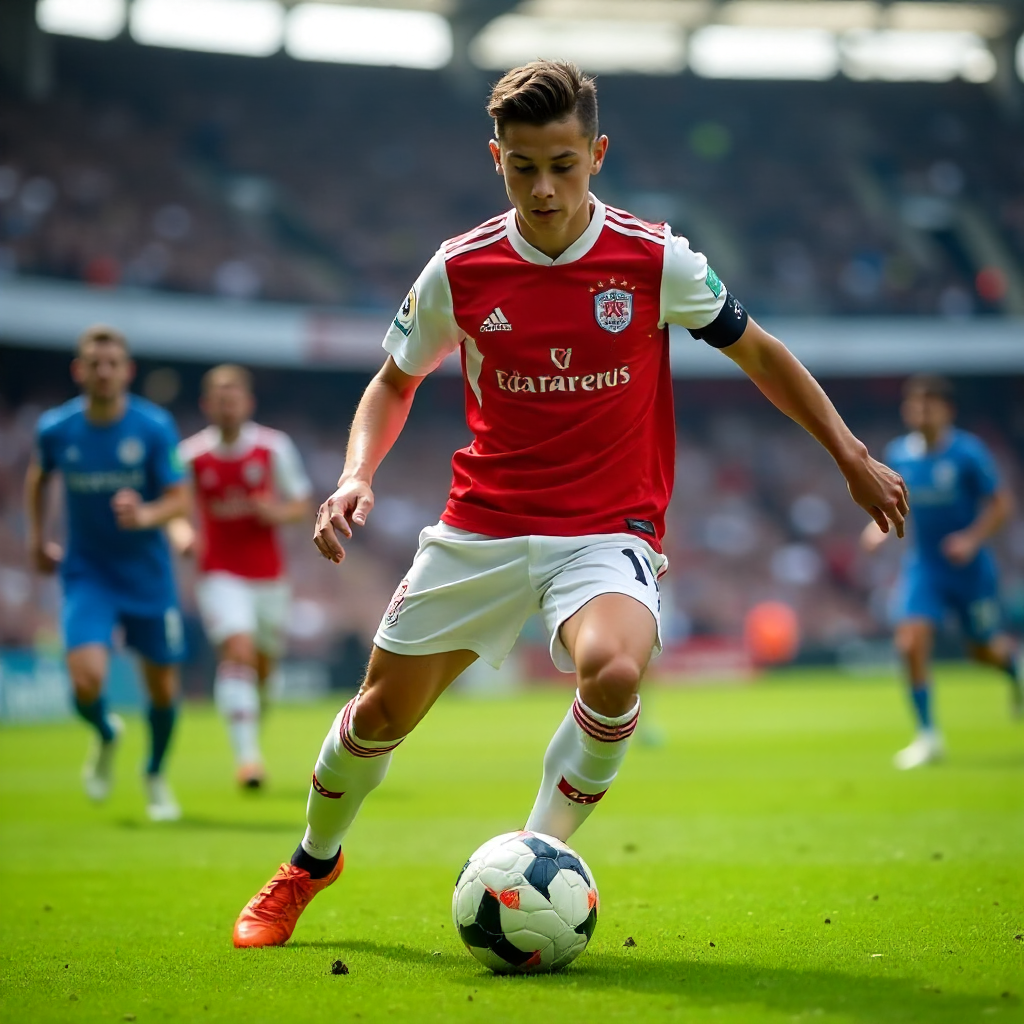
What separates the genuine prospects from the flash-in-the-pan types is positional intelligence. The midfielders worth following this year are not just technically gifted — they are finding pockets of space, dictating tempo, and making decisions quickly under pressure. That cognitive side of the game is what scouts weight most heavily, because technique can be coached but spatial awareness at pace is rare.
Position profile matters here too. A deep-lying playmaker in a possession-dominant side will accumulate very different numbers than a box-to-box midfielder in a counter-attacking system. Context is everything when evaluating whether the stats reflect genuine quality or simply a favorable system.
Defenders Who Are Rewriting the Script
The most watchable young defenders this season are centre-backs and defensive midfielders who bring ball-playing ability alongside the physical and leadership qualities their position demands — a combination that makes them genuinely rare at any age, let alone under 22.
Modern football has shifted what top clubs want from their backline. A centre-back who can step into midfield, play through pressure, and initiate attacks is worth considerably more than one who simply wins headers. Youth academies across England, Spain, and the Netherlands have been building toward this profile for years, and the current crop of emerging defenders reflects that investment.
One signal worth watching: international call-up at youth level. A defender earning caps for their nation's under-21 or under-23 side is being evaluated by coaching staff who see players from multiple clubs every week. That cross-club comparison is a credible validation signal that domestic league performances alone cannot always provide.
The honest caveat: defenders take longer to establish themselves at senior level. A 19-year-old striker who scores goals gets headlines quickly. A 19-year-old centre-back who reads the game brilliantly will take another season or two before the mainstream catches on. That lag is precisely why getting them on your watchlist now makes sense.
Forwards and Wingers Lighting Up the Pitch
Attacking players — strikers, wingers, and second strikers — tend to generate the most visibility among rising stars because their contributions show up in the most obvious statistics: goals and assists.
This year's most compelling attacking prospects share a few traits. Pace combined with directness is the obvious one — players who can beat defenders in one-on-one situations and have the composure to finish. But the wingers drawing serious scouting attention are also showing up in pressing metrics, tracking back, and contributing defensively. That two-way work rate is what separates a player who can play in a top-six side from one who can only thrive in a system built around them.
Strikers are a different profile. The young centre-forwards worth following right now are not necessarily the highest scorers in their leagues — they are the ones whose goal involvement rate (goals plus assists per 90) is climbing while their shot quality is improving. A striker who scores 10 goals on 40 shots is less interesting than one scoring 8 on 22, because the second player is making better decisions and will likely score more as the season progresses.
Transfer speculation around a young forward is a reasonable engagement hook, but treat it carefully. Early-season interest from bigger clubs can disrupt a player's form and confidence. The ones who handle that noise and keep performing are the ones whose breakthrough season becomes a genuine career inflection point.
The International Factor: Players on the Verge of a Call-Up
International recognition is one of the clearest validation signals for a young player's elite potential — it means national team coaches, who have access to data and scouting reports most fans never see, have decided this player belongs in their plans.
The pathway from club form to international call-up is not always linear. A player can be outstanding for a mid-table club and get overlooked simply because selectors favor players at bigger clubs. But when the performances are undeniable — sustained over weeks, not just one viral game — the call-up tends to follow.
Players who have already earned youth international caps (under-20 or under-21 level) and are now pushing for senior recognition are particularly worth tracking. That transition from youth international to senior squad is a significant step, and the players who make it mid-season, while their club form is peaking, often enter a confidence spiral that produces their best football.
Watch for players from nations with upcoming qualification campaigns or friendlies. Managers under pressure to qualify will sometimes fast-track genuinely exciting young talent — not as a gamble, but as a calculated move when the player's form leaves them little choice.
How to Follow Their Progress This Season
The most effective way to track rising stars is to build a consistent habit around match-by-match data rather than relying on post-match headlines, which tend to flatten nuance into simple narratives.
Use live scores and match analysis tools to check not just whether a player scored, but how many minutes they played, their involvement in build-up play, and whether they were substituted on or off. A player taken off in the 60th minute every week is not being trusted with the full game — that context matters.
Match previews are underrated for this purpose. Before a fixture, check whether the player is likely to start given the opposition's defensive setup. A creative midfielder facing a low-block side will have a different game than one playing against a high-pressing team. Understanding those matchup dynamics helps you interpret the performance data correctly.
Return to this site's player analysis and preview sections regularly throughout the season. The players featured here will be revisited as their situations evolve — transfers, injuries, form dips, and call-ups all shift the picture. Following their trajectories over a full season, rather than in isolated moments, is how you genuinely get ahead of the curve.
Frequently Asked Questions
What age qualifies a player as a "rising star" in football?
There is no fixed rule, but most editorial definitions and scouting frameworks place rising stars between 17 and 23 years old. Some contexts extend this to 25 for players who had delayed development pathways — late bloomers from lower-league backgrounds, for instance. Age is less important than trajectory: a player improving sharply at 24 is more interesting than one plateauing at 20.
How do scouts identify breakout talent before the mainstream media?
Professional scouts rely on a combination of data platforms (which track player performance across dozens of metrics), video analysis, and live attendance at matches outside the spotlight. They are often watching players in second divisions, youth leagues, or smaller national leagues months before those players earn top-flight minutes. The mainstream media tends to catch up only once a player has already established themselves — which is why following dedicated scouting-oriented coverage gives fans a meaningful head start.
Can a player be a rising star if they play in a lower-profile league?
Yes, and some of the most interesting emerging talent right now is playing outside the traditional "big five" European leagues. The Portuguese Primeira Liga, the Belgian Pro League, and the Dutch Eredivisie have historically produced players who moved to elite clubs and thrived. League profile affects visibility, not quality — and clubs with serious recruitment operations are watching those leagues closely.
What stats best indicate a young player's long-term potential?
For attackers, progressive carries and expected goals (xG) per shot are more predictive than raw goal tallies. For midfielders, key passes and ball recoveries per 90 minutes reveal both creative and defensive contribution. For defenders, passing accuracy under pressure and aerial duel win rate matter most. Across all positions, consistency over a 15-plus game sample is more meaningful than a handful of standout performances.
How often are rising stars featured in player spotlight articles on this site?
Player spotlight features run throughout the season, with particular focus during transfer windows and international breaks when player form and market value are most actively discussed. Checking back regularly — especially around matchday previews and post-round analysis — is the best way to stay current on which emerging players are trending upward.