The Psychology Behind Penalty Shootouts: Pressure, Focus, and Decision-Making
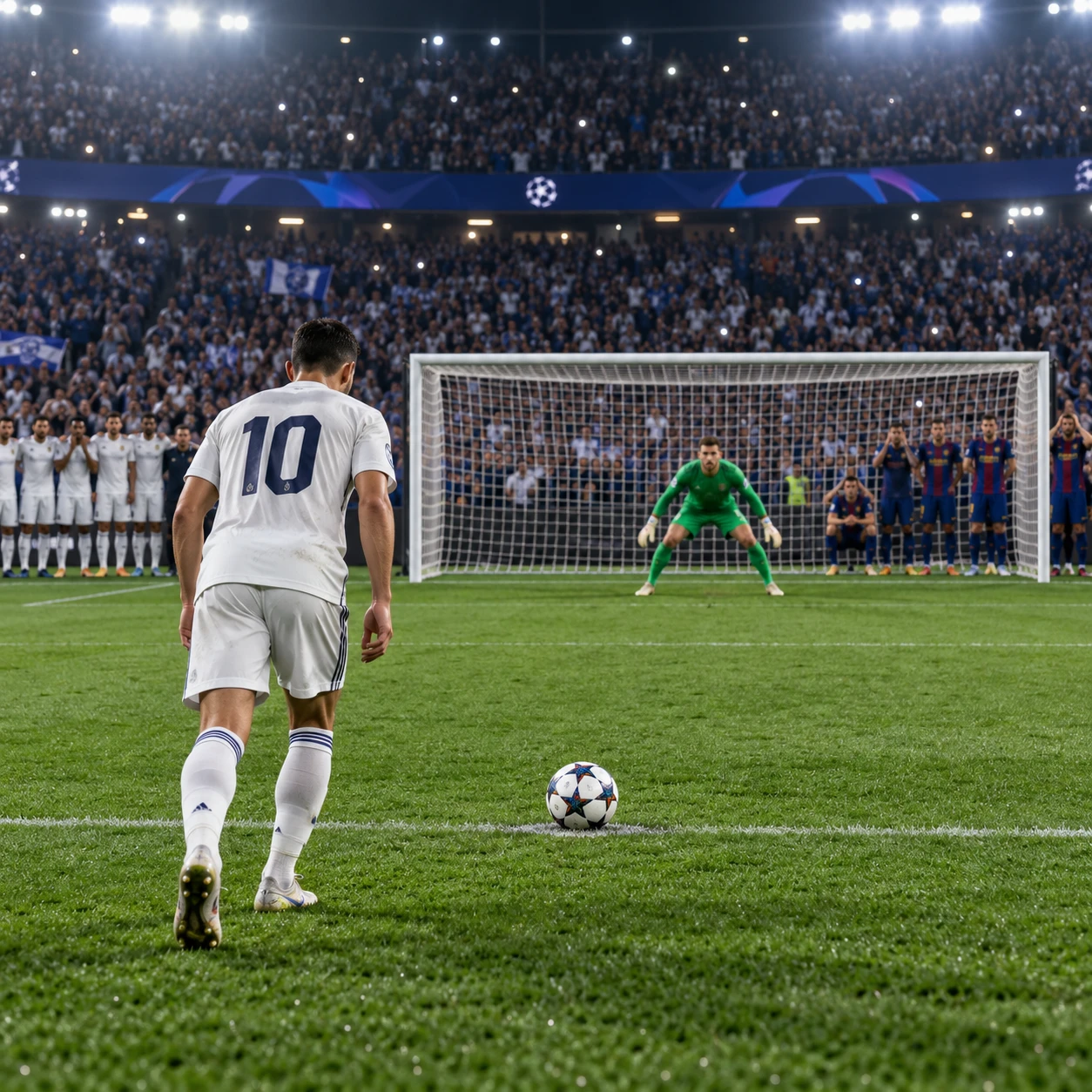
A penalty shootout reduces a team sport to a series of individual contests. The penalty taker has a ball, a target, and a goalkeeper to beat; the goalkeeper has a fraction of a second to respond. Yet the kick begins well before contact. Pressure, attention, confidence, and decision-making all shape what happens in those few seconds.
Psychology does not determine every outcome. Technique, fatigue, the goalkeeper’s movement, and plain chance matter too. But understanding the mental demands helps explain why a player may change a plan, rush a run-up, or hesitate at a moment when the physical task seems simple.
Why penalty shootouts create intense psychological pressure
Penalty shootouts create intense pressure because each kick has a clear outcome, unfolds in public, and can immediately change a match. Players must perform a familiar skill while knowing that teammates, opponents, and a crowd are judging the result.
Unlike open play, a shootout removes many of football’s usual distractions and options. The penalty taker cannot pass, dribble, or wait for a better opening. That simplicity can sharpen attention, but it can also make the consequences feel unusually personal. A miss is visible and easy to remember, while a routine conversion may quickly be taken for granted.
The taker and goalkeeper experience different versions of the same pressure. The taker is expected to initiate the action and may feel responsible for the team’s fate. The goalkeeper has less control over the outcome, but can still feel exposed: one successful save may make them a hero, while a goal is often treated as inevitable. Neither role is psychologically easy.
Anxiety can affect attention and movement. A player may focus too much on the goalkeeper, the crowd, or the importance of the kick instead of the intended target and striking action. Some feel their run-up speed change or their body tighten. These reactions vary by player, so pressure does not automatically lead to poor execution. It raises the risk of distraction and indecision.
The penalty taker’s battle between planning and instinct
A penalty taker performs best when a clear plan guides the kick and attention stays on executing it. Choosing a target in advance can reduce hesitation, though the plan must still allow for the goalkeeper’s movement and the taker’s technical strengths.
Players generally face a choice: aim for a preferred side and commit, or wait to read the goalkeeper and adjust. A preselected target can simplify decision-making under pressure. But if the taker changes direction late after noticing a goalkeeper’s shift, the adjustment may disrupt balance, contact, or accuracy. Commitment is useful when it reflects preparation, not stubbornness.
Attention is another battleground. The goalkeeper may move, delay, or use gestures to draw the taker’s gaze away from the ball and target. The crowd can add noise, while the long pause before the whistle gives the mind room to replay possible outcomes. A focused routine helps narrow attention to useful cues: the approach, the plant foot, and the intended strike.
Confidence should not be confused with certainty. A confident taker trusts a repeatable action and accepts that the goalkeeper may still save a well-hit shot. Trying to guarantee the outcome can increase tension and encourage overthinking. The practical objective is to make a high-quality decision, then carry it out.
How goalkeepers use anticipation and psychological tactics
Goalkeepers use anticipation to narrow the time they need to react, but they cannot reliably know a penalty’s direction in advance. They combine observation, scouting, and probability with a decision about when and where to dive.
Before the kick, a goalkeeper may study a taker’s previous penalties, preferred foot, approach angle, and body position. These cues can inform a guess, but they are not guarantees. A skilled taker can disguise a target, and a goalkeeper who commits too early can make the choice easier for the penalty taker.
There is a trade-off between waiting and anticipating. Waiting longer may provide more information about the strike, but the ball travels quickly and leaves little time to cover the goal. Moving early gives the goalkeeper a better chance of reaching a corner, while increasing the risk of being sent the wrong way. The best choice depends on the keeper’s reading of the taker and the team’s preparation.
Some goalkeepers try to unsettle opponents with movement, eye contact, or a delay before taking position. These tactics can work if they prompt hesitation, but they can also help a taker who has already committed to a routine. Goalkeepers must manage their own attention too: focusing on theatrics at the expense of a clear plan can undermine their response.
Routines, confidence, and emotional control
A pre-shot routine gives a penalty taker a familiar sequence to follow, helping direct attention toward the task and steady decision-making. It cannot remove anxiety, but it can make performance less dependent on how calm the player feels.
A routine might include placing the ball, taking a set number of steps back, choosing a target, taking a breath, and beginning the run-up. The exact sequence matters less than practicing it consistently. Under pressure, familiar actions can provide useful structure when thoughts become noisy.
Emotional control does not mean suppressing every sign of nerves. A player can feel anxious and still take a composed penalty. The aim is to notice the feeling without letting it dictate a new plan, a rushed approach, or an unnecessary glance at the goalkeeper. Coaches can help by rehearsing the routine in realistic settings rather than asking players simply to “stay calm.”
Routines also have limits. A fixed sequence may become awkward if the player is interrupted or the conditions change, and a rigid plan can fail if it does not suit the individual’s technique. Teams should help players build repeatable habits that remain adaptable to the moment.
How match context changes the mental challenge
Match context changes the mental challenge by shaping how much responsibility a player feels and what each kick seems to mean. The score, shootout order, fatigue, crowd, and teammates’ reactions can all influence attention and confidence.
A kick that could win the shootout may feel different from one that must be scored to keep the team alive. Earlier penalties can set a tone, but momentum is not a force that guarantees the next result. A teammate’s miss may increase pressure on the following taker, or it may sharpen their focus. Players respond in different ways.
Fatigue matters because a shootout follows a demanding match. Tired legs can affect the run-up and striking quality, while mental fatigue can make it harder to maintain a chosen plan. Crowds and home support may energize a player or make the moment feel more exposed. Team dynamics also matter: a supportive gesture can reduce isolation, while visible blame can make responsibility heavier.
For analysts, the key is to look for observable changes rather than assume what a player feels. Did the taker alter their usual routine? Did they look toward the keeper several times, slow the run-up, or change their target late? Such details can suggest how the context affected execution, but they do not prove the player’s private state.
What coaches and teams can do to prepare
Coaches can prepare players for shootouts by practicing both the technical kick and the decisions surrounding it. Effective preparation builds consistent routines, realistic pressure, and clear team roles without pretending that rehearsal can control every outcome.
Teams can use a simple preparation framework: plan, rehearse, support. Plan who is willing and technically prepared to take a kick; rehearse target selection and personal routines; support players before and after each attempt. This keeps preparation concrete without reducing performance to a test of “mental toughness.”
- Practice the real sequence: Include the walk to the spot, ball placement, whistle, run-up, and recovery after the kick.
- Rehearse decisions: Ask each taker to choose a preferred target and define what, if anything, would make them adjust.
- Use pressure carefully: Simulate crowd noise, competition, or a consequence for the practice result, while avoiding drills that teach players to fear mistakes.
- Prepare goalkeepers: Review available information, agree on a decision approach, and practice waiting or committing at different moments.
- Set team roles: Decide who communicates, who supports the next taker, and how the group responds after a miss.
Practice should reflect individual differences. One player may benefit from a brief breathing cue; another may prefer to focus on a familiar visual target. Coaches should review decisions and execution, not label a player as mentally weak after a miss. A shootout remains uncertain even when preparation is excellent.
Frequently asked questions about penalty shootout psychology
Why do penalty takers feel more pressure than goalkeepers?
Penalty takers often feel greater responsibility because they initiate the action and a miss is easy to attribute to one person. Goalkeepers face pressure too, but the task is different: they react to a shot with limited time and can be praised for a save even if most penalties are scored.
Does choosing a side in advance help a penalty taker?
Choosing a side in advance can reduce last-second hesitation and help a taker commit to a rehearsed technique. It is not foolproof; the player should use a plan that fits their ability and avoid changing it impulsively after noticing the goalkeeper.
Can goalkeepers genuinely read where a penalty will go?
Goalkeepers can use scouting and body cues to make informed predictions, but those cues do not reveal the target with certainty. Anticipation is a calculated decision under time pressure, not a reliable way to know the direction beforehand.
How can players manage nerves during a shootout?
Players can rely on a practiced pre-shot routine, focus on a specific target and striking cue, and accept that nerves may remain. Rehearsal helps them act with purpose even when they do not feel completely calm.